Sunday, March 10, 2019

LAD #37: FDR’s Executive Order 9066

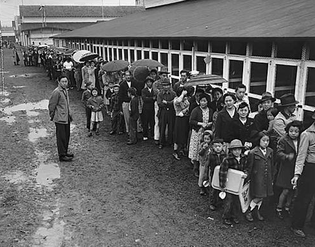
Taking measures to ensure national security, President Roosevelt issued the Executive Order No. 9066. This order essentially allowed the creation of military areas which were then used to relocate Japanese Americans. The President ordered the Secretary of War and Military Commanders to create this military areas where people would be excluded and allowed them to impose their own restrictions. Furthermore, the President asked other federal agencies to assist these military measures by providing support. This is seen in "Home is a Horse Stall" when Sox goes to the internment camp, which was a military area created by the government. I understand the need for national security of the time, however I believe that excluding Japanese Americans was a step too far, especially since these people were United States citizens. 
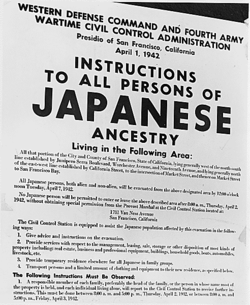
Image result for executive order 9066

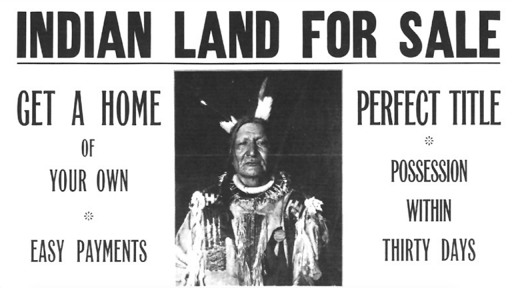
This is similar to the Dawes Act which permitted the division and reorganization of Indian tribal land, forcing them onto reservations like the internment camps.
Image result for dawes act

Thursday, March 7, 2019

LAD #36: FDR’s Declaration of War

On December 8, 1941, the United States declared war on Japan. The Japanese attack on Pearl Harbor led the US to declare war. And, FDR stated that December 7, 1941, the day which Japan attacked Pearl Harbor, was "a date which will live in infamy." FDR goes on to explain how the US had originally not intervened in the warfare in these countries. However, the Japanese attack has resulted in destruction in the United States, and America needs to defend itself. He explains how Japan has gotten out of control and have become hostile. Therefore, the United States has to fight them. Jeanette Rankin was the only member of the Houses that voted against the declaration of war on Japan. She later received nicknames including "Japanette Rankin" as she was looked down upon for her vote. 
Image result for fdr declares war
similar to WWI the United States broke their policy of neutrality to defend themselves against Germany and for WWII, Japan.

LAD/Blog #35: Home was a Horse Stall

The story of how and when Sox grew up was heartbreaking. Executive Order 9066 was put in place by Roosevelt to establish military areas and the Civilian Exclusion Order No.27 said that Japanese would be excluded from the West Coast. The first thing that caught my attention was when they were in the car and the radio announcement came on. Yumi expressed how terrible it was for her especially since she is not a U.S. citizen, she's a first-generation Japanese immigrant. Her native country was now the enemy and even her children recognized that their life was going to change. This is truly heartbreaking because she then goes on to see that their new home is a horse stall and this illustrates how Americans did not treat these U.S. citizens with respect. Lastly, the description of camp life was notable. This act gave $20,000 to surviving internees, a law that gave compensation to those relocated by the camps and a fund to educate people on the internment experience.Image result for home was a horse stall
this is similar to how the Indigenous people were treated in America, and forced onto reservations.
Image result for home was a horse stall

LAD/Blog #34: FDR's First Inaugural

On March 4th, 1933, Franklin D. Roosevelt delivered his first inaugural address. He asks for the support of the people as America has endured many dark times. Roosevelt tells the people not to panic, stating "the only thing we have to fear is fear itself." He then goes on to talk about the issues in material and money that arise from banking. He continues detailing the problems of the United States, including the materialism of the Roaring Twenties that led the money changers into the Stock Market Crash. The President is going to have safeguards, regulation, and stop speculation. He then discusses his good neighbor policy which he plans to respect the rights and agreements of other nations. Lastly, he asks for the people to trust him in the position he's taking since he is planning on assuming a lot of power. 
Image result for fdr first inaugural address
FDR similar to Herbert Hoover tried to help America during the depression, however, FDR actually succeded.

Sunday, March 3, 2019

LAD/Blog #33: Kellogg-Briand Peace Pact

The Kellogg-Briand Peace Pact was passed in 1928 by several countries, including Germany, France, and the United States. This eventually turned out to be a complete failure, though it began with high hopes and good intentions. The idea was that the treaty would encourage a more peaceful way of dealing with conflict diplomatically with the countries that signed, rather than barbarically go to war immediately. The United States became the unofficial leader of this agreement as it progressed, and allowed other nations to join the treaty. However, there was something fundamentally wrong with this pact. This, unfortunately, did not. Without military support, they could not enforce the pact if a country decided to break it.
Image result for kellogg briand pact

similar to the league of nations the Kellogg-Briand Peace Pact also had no military support leading to failure

Image result for league of nations

Sunday, February 10, 2019

LAD/Blog #32: Wilson's 14 Points of Peace

Woodrow Wilson proposed his Fourteen Points on January 8, 1918. These points created a basis for peace and were later incorporated into the Treaty of Versailles. However, these points, to a greater extent, were idealistic. This is reflected in the failure of the Treaty of Versailles. Wilson did not plan to punish Germany. However, his points were too lenient for some of the Allies. France, for example, wanted to implicate harsh penalties and war reparations on Germany. Hence, the War Guilt Clause was created. Therefore, it is clear that the Fourteen Points were far too idealistic. Wilson could not implement the freedom of navigation, removal of economic barriers, and creation of new boundaries, amongst other points. Especially, he could not enforce the creation of the League of Nations, which the US refused to enter. 
Image result for woodrow wilson 14 points

The Fourteen Points eventually set the foundation for the Treaty of Versailles. These points proposed peace, which, when the Great War was over, were used to end the war. Nonetheless, the Treaty failed, eventually leading to WWII.
Image result for world war 2

Tuesday, February 5, 2019

LAD/Blog #31: Schenck V. United States

In World War I, Schenck distributed circulars, which are letters addressed to a large group of people, with the purpose of getting the attention of those being drafted. He argued against the draft but only suggested peaceful action or resistance against the Conscription Act (and act that made the first wartime draft in the United States). However, Justice Holmes ruled that Schenck's actions violated the Espionage Act since his letters seemed to talk down the military and discourage people from attending. Holmes argued that Schenck's letters presented a "clear and present danger" so, Congress had the right to stop and prevent these actions.
Image result for schenck vs us
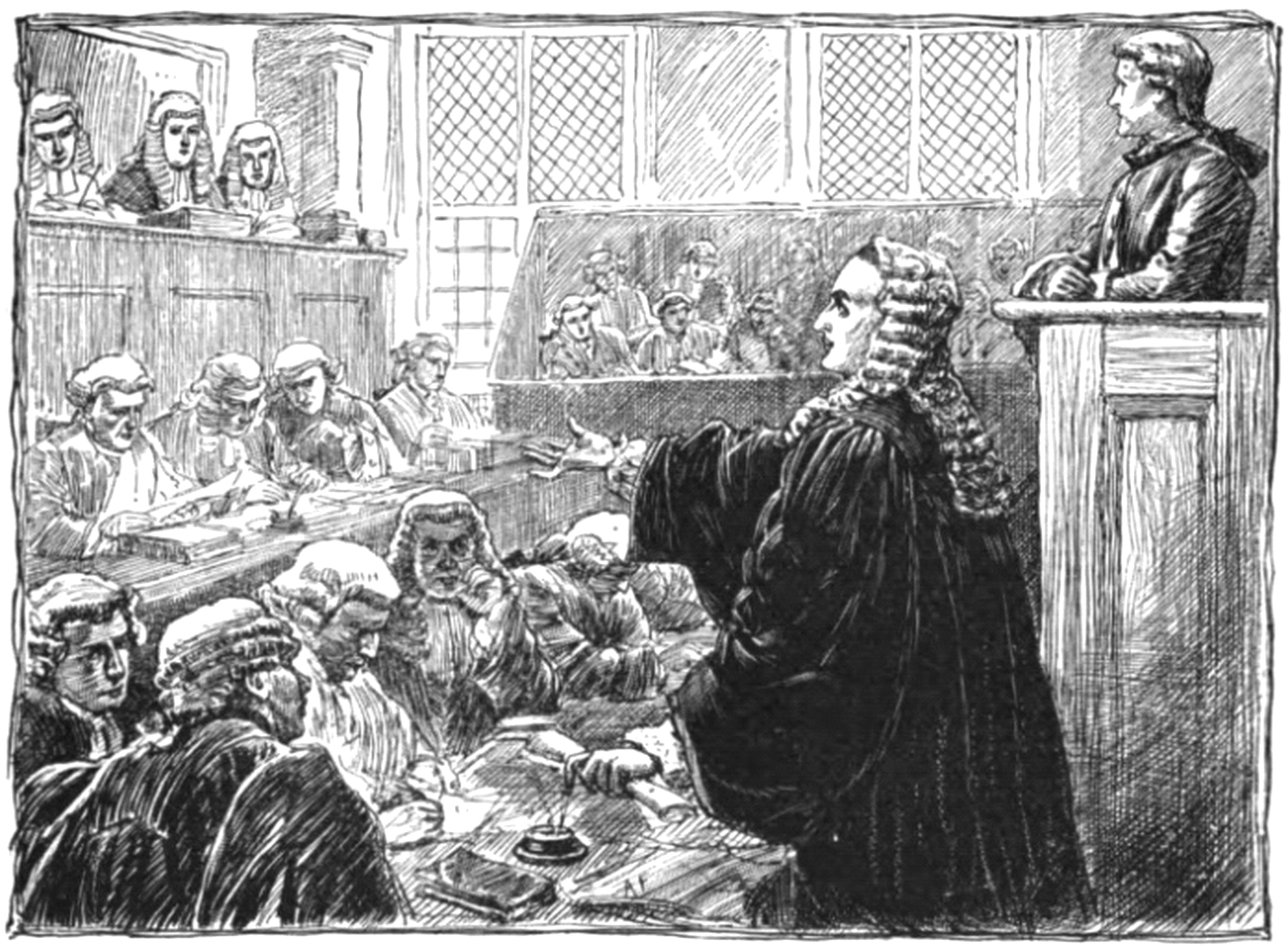
This is similar to the Peter Zenger trial since in this trial, Zenger was tried with speaking out against the government like Schenck.
Image result for peter zenger